Google’s core web vitals are a set of metrics that the company uses to measure the performance and quality of webpages. These include speed, mobile responsiveness, accessibility, security, and engagement signals like load time, page load slowdowns, and in-page navigation.
Google created these vitals to help webmasters improve their websites and make them more responsive to users. The vitals are also used by Google’s ranking algorithm to determine which pages rank highest for specific queries.
If you’re a business that depends on traffic and leads from your website, it’s important to understand these vitals and how they can affect your website. By catering for these core web vitals, you can help your website rank higher on Google and improve your website’s user experience.
What are Google's core web vitals anyway?
Google’s core web vitals are:
- Speed – how fast your website loads
- Mobile responsiveness – how well your website looks and functions on mobile devices
- Accessibility – how easy it is for people with disabilities to use your website
- Security – how safe your website is from malware and other online threats
- Engagement signals – how well your website engages users and keeps them on the page
A ranking factor for Google
Google has said that the vitals are one of many factors that the company takes into account when ranking websites. However, they are an important factor, and improving your website’s performance in these areas can help you rank higher on Google.
In a study by SEMrush, it was found that page speed was the number one factor that affected a website’s ranking. The study also found that mobile responsiveness was the second most important factor, followed by security and then accessibility.
Without these new Core Web Vitals, SEO would be missing a lot of important data. The three metrics that represent load time and visual stability as well as interactivity in a page all come together to give us an accurate picture on how fast or if our website is being viewed by people online!
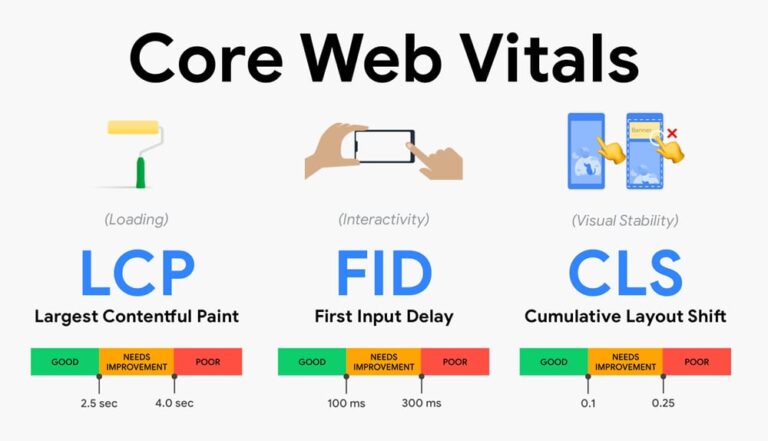
- Largest Contentful Paint (LCP) tracks when the largest above the fold content element appears;
- Cumulative Layout Shift (CLS) shows how much unexpected layout shifts (ads, pop-ups, etc.) affect a page’s visual stability;
- First Input Delay (FID) measures how long it takes for the browser to begin processing the first user interaction on a page.